Context
Movam builds multi-platform B2B logistics products serving 10,000+ users. Every product decision has to work for three groups at once: business customers who ship goods, driver partners who move them, and the internal operations team that keeps both running.
The problem
For the business, shipments need drivers. Every driver lost during registration was capacity we could not sell.
For drivers, joining meant gathering a stack of paper documents and handing them over, then waiting through a long, manual process.
For operations, it meant filing and finding those papers by hand. Documents went missing before we needed them. Some registrations never completed at all.
Why it mattered
The bottleneck to growth was onboarding friction, not demand.
More drivers on the platform meant more shipments and more sales. That made onboarding the shortest path from product work to revenue, and the right first priority ahead of the other capabilities on the roadmap.
My role and team
I owned the problem definition, the requirements, the backlog and the release plan. I coordinated design, engineering, operations and testing. Designers designed and engineers built. My job was to decide what we built, why, and in what order, and to keep everyone pointed at the same outcome.
Discovery
I used workflow reviews to trace how a driver got from first contact to approved and active: where documents came in, where they were stored, where they went missing and where drivers dropped out. This is the same business-process review I used across Movam to find operational bottlenecks for internal teams. Onboarding was the costliest one.
I spoke with more than 20 drivers and operations staff. Their accounts matched: drivers had to submit paper documents, papers went missing, registrations stalled or failed, and the whole process was long and manual.
Key insights
- Friction, not demand, was capping growth. Paper and a long process were losing us drivers we had already won.
- Not every driver is comfortable with technology. Some drivers are not at ease with apps, so a fully automated flow would shut them out: exactly the people we were trying to recruit.
Options and trade-offs
The obvious option was full end-to-end automation with verification APIs, and no human in the loop. I rejected it and chose a hybrid: drivers self-register on their phone and upload documents straight into the admin portal, with manual approval steps where needed.
| Option | Upside | Risk | Decision |
|---|---|---|---|
| Fully automated verification | Fastest for confident users, with the least work for operations | Drivers who got stuck in verification had no way forward, so we would lose them again | Rejected |
| Hybrid: digital self-registration plus manual approval where needed | Removes paper for everyone, and nobody is blocked by verification | Keeps some manual work for operations | Chosen |
I accepted some manual effort for operations in exchange for not losing drivers at the verification step. Supply mattered more than a fully automated pipeline.
What we built
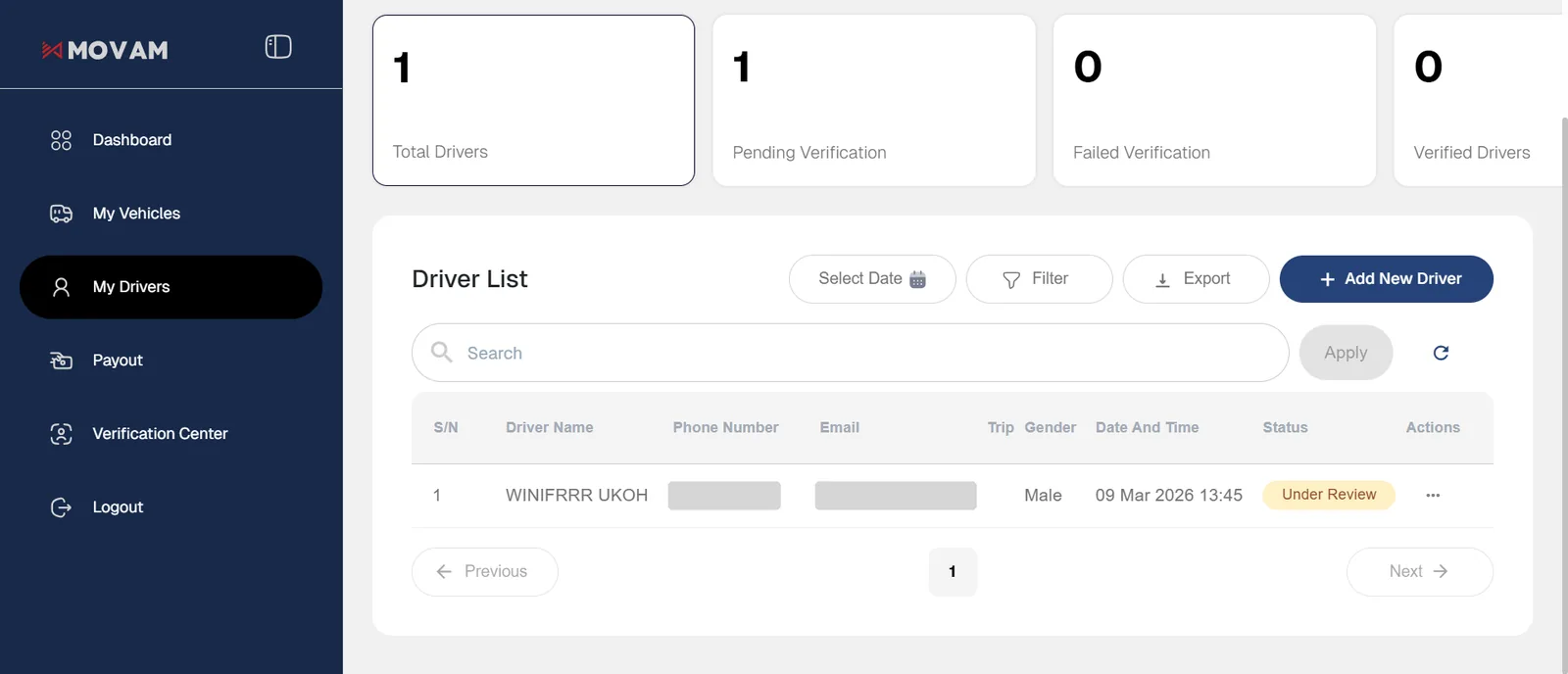
A self-service partner onboarding flow. Drivers register on their phone and upload their documents in the flow. The documents go straight into our admin portal and are stored there, not on paper. Operations reviews and approves manually where a step needs judgment.
 (opens full size)
Once driver supply was moving, the roadmap moved on to alternative-route planning, geofencing and remote locking in later releases.
Later: alternative-route planning
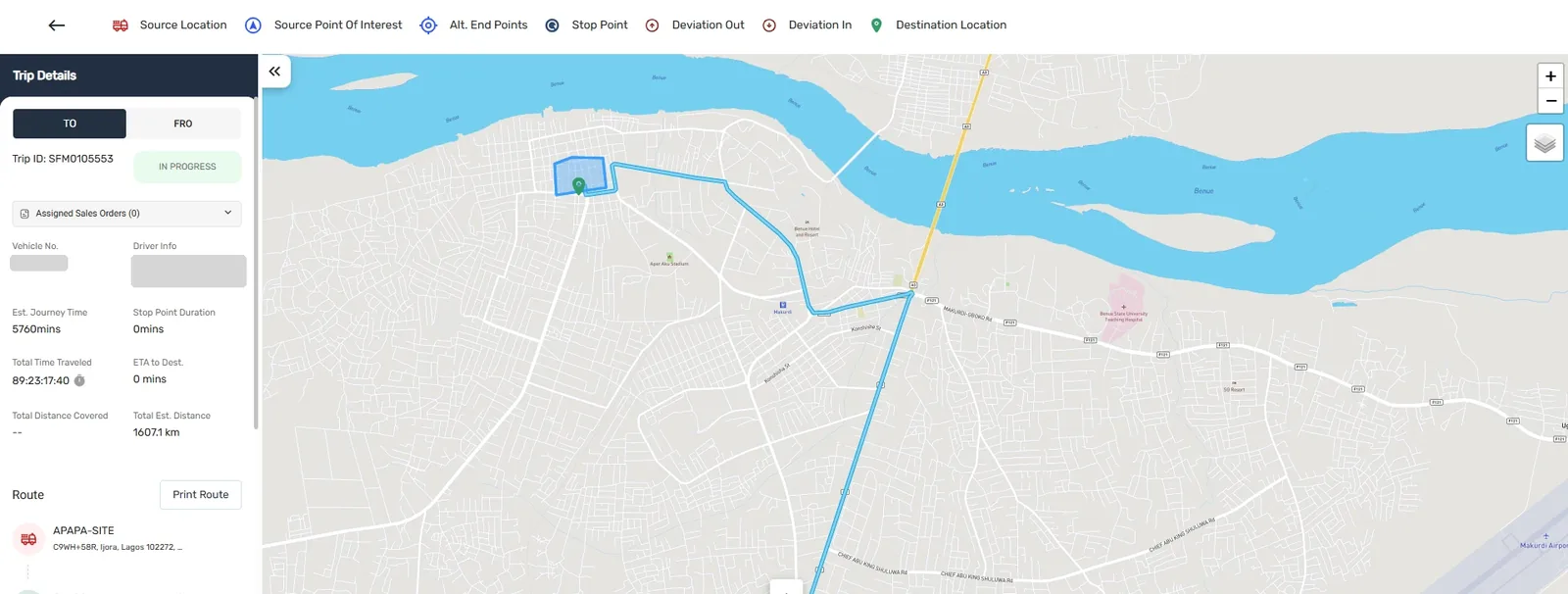
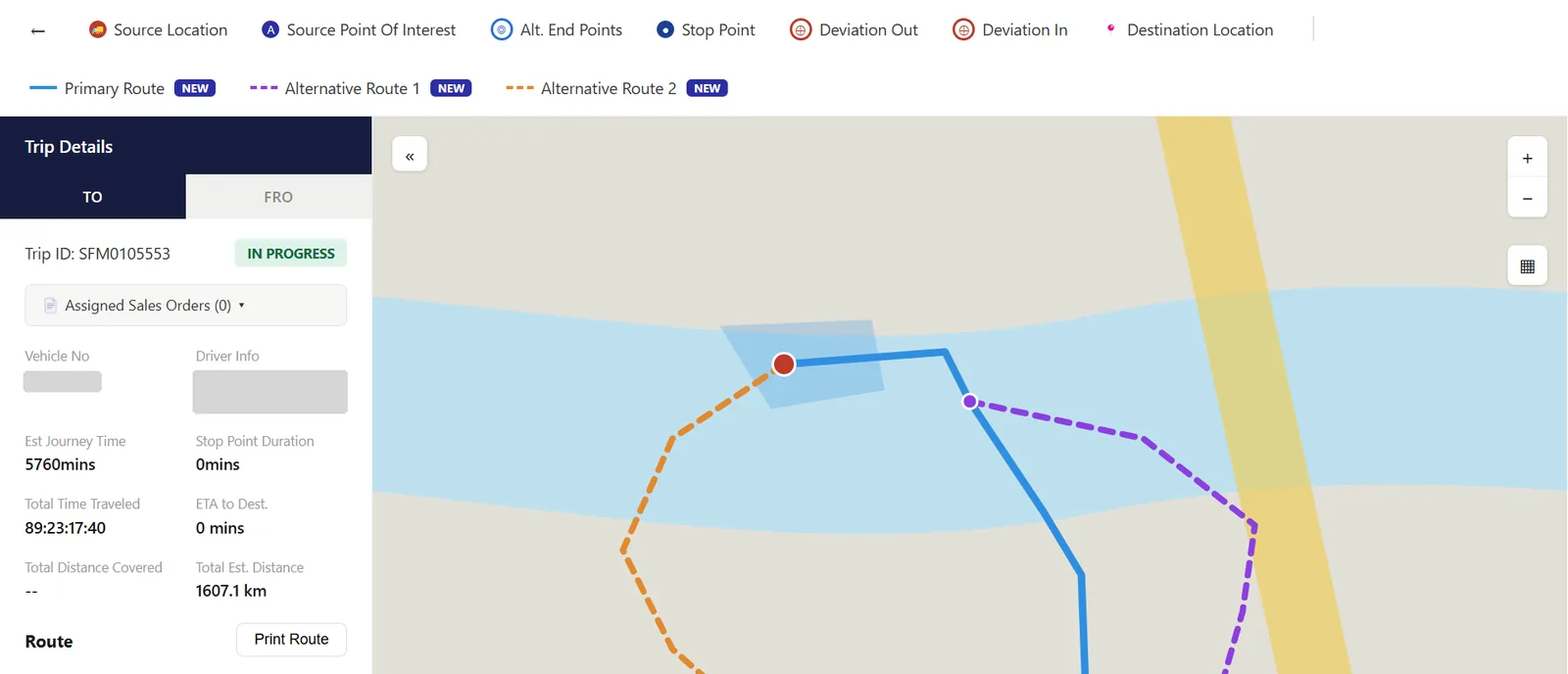
Once onboarding was moving, I led alternative-route planning, so drivers and operations could manage deviations from planned routes. Before it, each trip had one planned route on the map. A driver who took another approved road, such as Carter Bridge instead of Third Mainland Bridge, could look the same as a driver who had gone off route for no good reason.
 (opens full size)
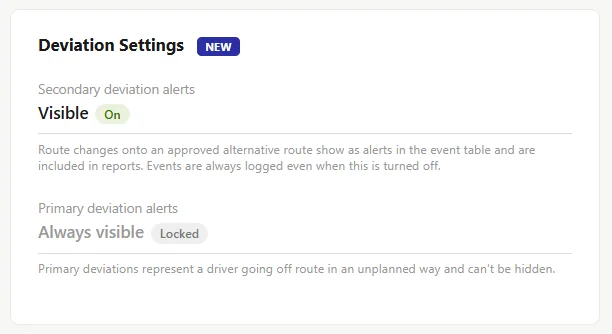
We let operations approve up to two alternative routes for a trip alongside the primary route, and split deviations into two kinds:
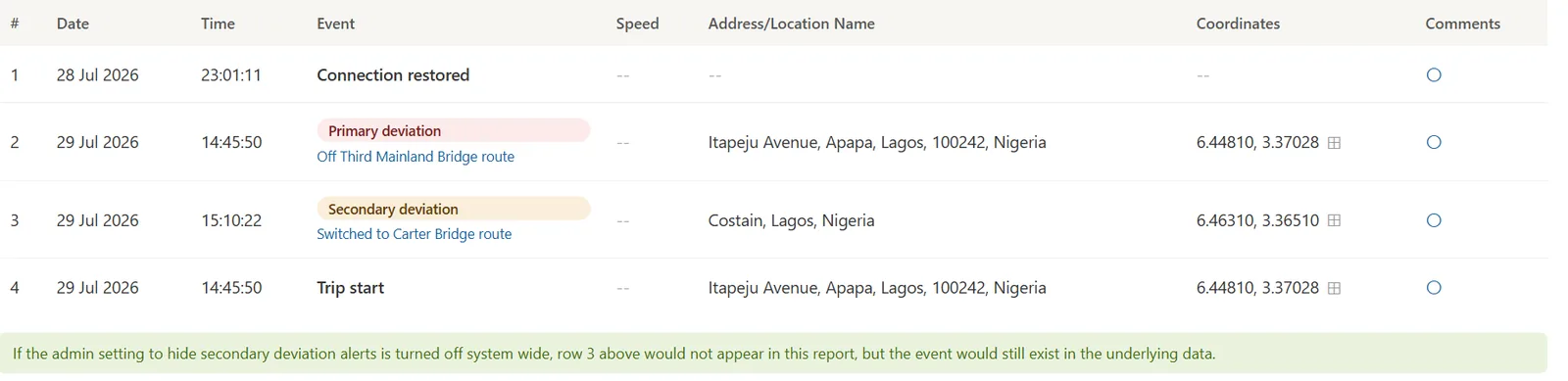
- Primary deviation: the driver leaves every approved route in an unplanned way. These alerts are always visible and can't be hidden.
- Secondary deviation: the driver switches onto an approved alternative route. Admins choose whether these show as alerts in the event table and in reports. The event is always logged either way.
 (opens full size)
 (opens full size)
 (opens full size)
The result was fewer route-deviation alerts and faster follow-up by the operations team.
Geofencing and remote locking came next, as related safety and operations capabilities, also delivered after onboarding.
The platform I owned
Onboarding and route planning sat inside a wider fleet-management platform. I owned the roadmap across six product areas, each doing a different job for fleet owners and operations teams.
Live tracking
See where every vehicle is, what its driver is doing, and where it has been.
- Track-vehicle map with satellite view and Mapbox layers
- Vehicle FTN (fleet time name): drivers update their status at each point in the day, such as at the warehouse, available for loading or in an accident
- Backtracking with playback of past trips
Trip management
Plan trips and keep them on route.
- Creation of locations, routes and trips
- Trip routes and alternative-route planning
- Geofencing
- Remote locking
Electronic proof of delivery (EPOD)
Prove that each delivery happened.
- EPOD report
- Trip EPOD
- Invoice EPOD
- EPOD compliance reporting
Dashboards and activity reports
Spot risky driving, lost signals and idle assets.
- Overspeeding, safety violation and night driving reports
- Connection loss report
- Distance travelled, ignition hours and active vehicle reports
- Summary report
- Scheduled and downloadable reports
Fleet maintenance and compliance
Keep vehicles and their paperwork road-ready.
- Vehicle maintenance module
- Document management with expiry notifications
Driver supply
Get drivers onto the platform fast.
- Self-service partner onboarding, covered above
I prioritised across these areas the same way I did for onboarding: by asking which constraint cost the business most. Onboarding came first because it unblocked driver supply. Tracking, trip control and EPOD then made each trip visible, controllable and provable, and the reports gave fleet owners that data in a form they could act on.
How I worked with design, engineering and ops
Operations were users of this product as much as drivers were. The admin side, where documents land and approvals happen, got the same attention in requirements as the driver flow.
I wrote the requirements, user stories and acceptance criteria, ran backlog prioritisation with engineering and design, and worked with testing on what "done" meant for each release. Later at Movam I added AI-assisted workflows to this work: research synthesis, requirements drafting, edge-case analysis and test planning, with every output reviewed by me and the team before it entered the backlog.
Launch and measurement
After launch, driver registration time fell from up to two weeks to less than one day. More drivers came on board, which supported more shipments and sales.
At product level, I put data-led experimentation and product feedback loops in place. They contributed to a 12% improvement in user activation.
Outcomes
The registration time is for onboarding. The other figures describe the combined effect of my work at Movam, not onboarding alone.
What I learned and what I'd do next
Inclusion can be a growth lever. Keeping a human step for less confident drivers was not a compromise. It protected supply.
What I'd do differently: bring AI in earlier. Much of this work was manual, and shipping took longer than it would today. I would use AI-assisted workflows earlier for requirements, edge cases, test planning and document checks to shorten delivery, while keeping human approval where judgment matters.